Anna Banner crowned MBGN 2013. The 18 year old Anna Banner was crowned the 2013 Most Beautiful Girl in Nigeria and would represent Nigeria at the Miss World 2013 Finale in Jakarta, Indonesia. The 26th edition of the pageantry took place in Yenagoa, Bayelsa.
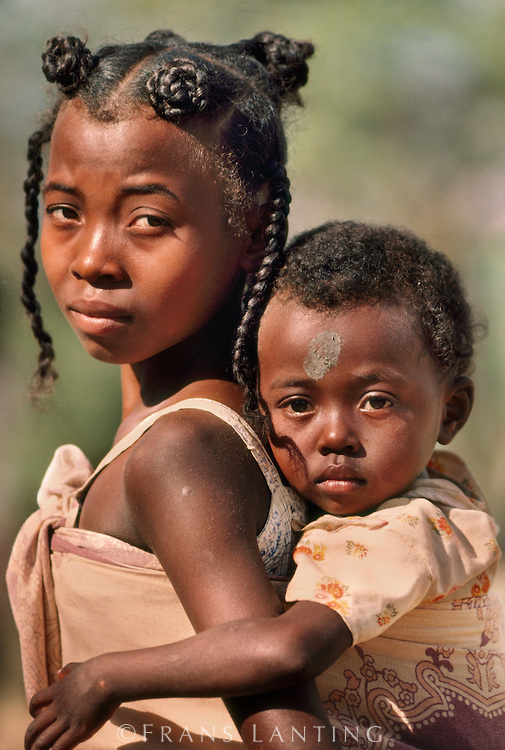
I first wrote about Child marriage back in May 28, 2013. The controversial Senate’s passage of a resolution to retain the provision of Section 29 (4) (b) of the 1999 Constitution. Under the section, a married underage girl is deemed to be an adult is very troubling and hits really close to home for me because my mother was a victim of child marriage due to firmly held traditions by my grand father. She was married to my father, who was about thirty years her senior, and was the third of four wives.
Although, she had some level of education, she was robbed of her childhood and dreams. I thank the U.S senators and all those that made it possible for passing the bill against child marriage, contrary to the Nigerian senators who voted on the resolution on July, 16 2013. I’m outraged and appalled, the facts is that there are people who practice this inexcusable behavior, where a girl child becomes a victim of pedophiles all in the name of culture.
How Did We Get Here?
Child Marriage in Nigeria, particularly, Northern Nigeria has some of the highest rates of early marriage in the world. The Child Rights Act, passed in 2003, raised the minimum age of marriageto 18 for girls. However, federal law may be implemented differently at the state level, and to date, only a few of the country’s 36 states have begun developing provisions to execute the law.
To further complicate matters, Nigeria has three different legal systems operating simultaneously—civil, customary, and Islamic—and state and federal governments have control only over marriages that take place within the civil system. Domestic violence is a widespread problem; some studies report that up to 81 percent of all married women admit experiencing some form of verbal or physical abuse by their husbands. (One study of Demographic and Health Survey data suggests that the lower the age at marriage, the higher the risk of domestic violence).
A high prevalence of child marriage exists
Nationwide, 20 percent of girls were married by age 15, and 40 percent were married by age 18. Child marriage is extremely prevalent in some regions; in the Northwest region, 48 percent of girls were married by age 15, and 78 percent were married by age 18. Although the practice of polygamy is decreasing in Nigeria, 27 percent of married girls aged 15–19 are in polygamous marriages.
Married girls receive little or no schooling
Virtually no married girls are in school; only 2 percent of 15–19-year-old married girls are in school, compared to 69 percent of unmarried girls. Some 73 percent of married girls compared to 8 percent of unmarried girls received no schooling, and three out of four married girls cannot read at all.
Large spousal age differences are common and may limit married girls’ autonomy and decision making ability
The younger a bride is, the greater the age difference between her and her spouse. In Nigeria, the mean age difference between spouses is 12 years if the wife marries before age 15, compared to 8 years if the wife marries at or after age 20. Spousal age differences are even greater when the girl is a second or third wife. In polygamous marriages, the mean age difference between spouses is 15 years, compared to 8 years in monogamous marriages.
First births have elevated risks; the youngest first-time mothers and their children are especially vulnerable to poor health outcomes
Eighty-four percent of first births to adolescent girls in Nigeria occur within marriage. Among married girls aged 15–19, 62 percent have already given birth. Almost one out of four married girls gave birth before age 15.
O V E R V I E W O F C H I L D M A R R I A G E
Child marriage is a fundamental violation of human rights. Many girls (and a smaller number of boys) are married without their free and full consent. By international conventions, 18 years has been established as the legal age of consent to marriage. If the timing of marriage does not change, over 100 million girls will be married as children in the next ten years.
Child marriages is closely associated with no or low levels of schooling for girls. In West and Central Africa, girls with three or fewer years of schooling are five times more likely than girls with eight or more years of schooling to marry before age 18. Poverty leads many families to withdraw their daughters from school and arrange marriage for them at a young age. These girls are denied the proven benefits of education, which include improved health, lower fertility, and increased economic productivity.
Child marriage, in many instances, marks an abrupt transition into sexual relations with a husband who is considerably older and unchosen.
The younger a bride is, the larger the age difference between her and her spouse. Parents frequently arrange marriages for their daughters without their input or consent; in Pakistan, only 3 percent of married girls had some say in choosing their spouse. In some settings it appears that the younger a girl is when she gets married, the less say she has in the choice of her husband.
What Can Be Done To Stop This Travesty of Justice?
Encourage state-level authorities to adopt the federal law that establishes 18 as the legal age of marriage for girls.
Engage communities through public campaigns, pledges, or incentive schemes.
Raise the awareness of parents, community leaders, and policymakers about the health and rights implications of young girls marrying much older men.
Develop special social and health support structures for young, first-time mothers.
Encourage governments and communities to commit to getting girls to school on time and to keeping them in school through the secondary level. Being in school during adolescence has important health and development benefits for girls.
Develop social and economic programs for out-of-school girls, including nonformal education programs.
Long speeches and a silent audience are the hallmark of my magnetic atmosphere.
I come to you with great concern, for this tide we must address; for its time has come.
My appearance may not be pleasing to the eyes, but make no mistake I control the Army to my right.
Long speeches this crowd must stand to give an ear, though under this hot tropical sun rays your weathered skins must bear.
Though you curse me in the silence of the night.
Our confidence is challenged, our budget is small, my resources are limited, and to the East and West we have become the center of attention.
My real weapon may be my idea logy, wrong as it may appear; for I want nothing else to compare.
Loyalty is to my country, though i may part with some natural resources in late night Ambassador four course dinner discourse.
My spoken words are out of anxiety, so please contemplate automatic alacrity and make no light of our austerity.
Your silence is a testimony to your attention to this tale of a story.
Tonight at your Family dinner tables you will wonder about my policies, yet at this moment your ears hear me out while your frame of mind is my point of reference.
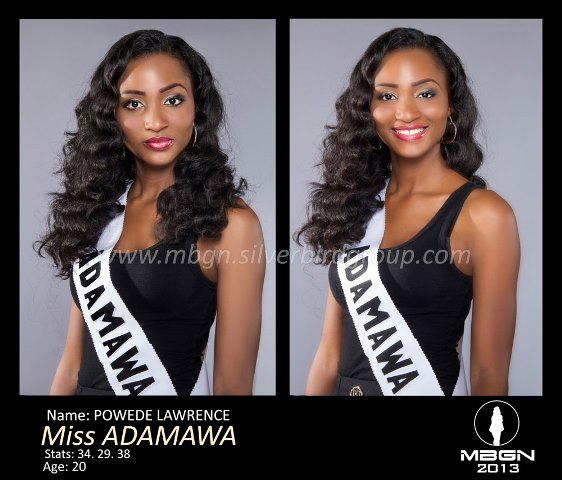
Originally known as Miss UniverseNigeria, it was renamed Most Beautiful Girl in Nigeria. One of these girls will take the crown from last year’s winner Isabella Ayukat thegrand finale billed to take place on Saturday 20th July 2013 in Bayelsa. What do you think, ain’t they just gorgeous?
Chimamanda Ngozi Adichie is not a writer at loss for a word, a thought, a next move. Her assured and humbling career owes to the continued spark of a lifelong curiosity with the people of post-colonial Nigeria. The author and 2008 MacArthur Fellow first attracted considerable attention a decade ago with her haunting debut Purple Hibiscus. Sophomore effort Half of a Yellow Sunconfirmed early promise with prestige, all for which she is gracious and little for which she probably cares, really. Her unflinching, multi-arc redemption stories bridge the gap between Africa and the West, in a vein perhaps only comparable to that of the late, missed Chinua Achebe. Here is a precise author compelled and suspicious, like the great ones are, of lasting happiness on and off the page.
After two novels chronicling familial and political upheaval in her native Nigeria, Adichie goes abroad for her new book, Americanah. The author’s fiercely clever stand-in, Ifemelu, follows the racial indignities she encounters as a college-educated African immigrant in the US with an uneasy return to Nigeria and her old flame, Obinze, now married and wealthy yet unfulfilled. Spanning the borders and histories between these two outsiders, Adichie defines the sum of disparate cultures with new clarity, while questions of identity and love remain elusive as ever.
Chimamanda Ngozi Adichie is himamanda Ngozi Adichie (born 15 September 1977) is a Nigerian writer. She is Igbo and has been called “the most prominent” of a “procession of critically acclaimed young anglophone authors that is succeeding in attracting a new generation of readers to African literature”. Born in the town of Enugu, she grew up in the university town of Nsukka in southeastern Nigeria, where the University of Nigeria is situated. While she was growing up, her father was a professor of statistics at the university, and her mother was the university registrar.
Adichie studied medicine and pharmacy at the University of Nigeria for a year and a half. During this period, she edited The Compass, a magazine run by the university’s Catholic medical students. At the age of 19, Adichie left Nigeria and moved to the United States for college. After studying communications and political science at Drexel University in Philadelphia, she transferred to Eastern Connecticut State University to live closer to her sister, who had a medical practice in Coventry. She received a bachelor’s degree from Eastern, where she graduated Summa Cum Laude in 2001.
In 2003, she completed a master’s degree in creative writing at Johns Hopkins University. In 2008, she received a Master of Arts in African studies from Yale University. Adichie was a Hodder fellow at Princeton University during the 2005-2006 academic year. In 2008 she was awarded a MacArthur Fellowship. She has also been awarded a 2011-2012 fellowship by the Radcliffe Institute for Advanced Study, Harvard University. Adichie, who is married, divides her time between Nigeria, where she teaches writing workshops, and the United States.not a writer at loss for a word, a thought, a next move.
Her assured and humbling career owes to the continued spark of a lifelong curiosity with the people of post-colonial Nigeria. The author and 2008 MacArthur Fellow first attracted considerable attention a decade ago with her haunting debut Purple Hibiscus. Sophomore effort Half of a Yellow Sunconfirmed early promise with prestige, all for which she is gracious and little for which she probably cares, really. Her unflinching, multi-arc redemption stories bridge the gap between Africa and the West, in a vein perhaps only comparable to that of the late, missed Chinua Achebe. Here is a precise author compelled and suspicious, like the great ones are, of lasting happiness on and off the page.
After two novels chronicling familial and political upheaval in her native Nigeria, Adichie goes abroad for her new book, Americanah (Knopf). The author’s fiercely clever stand-in, Ifemelu, follows the racial indignities she encounters as a college-educated African immigrant in the US with an uneasy return to Nigeria and her old flame, Obinze, now married and wealthy yet unfulfilled. Spanning the borders and histories between these two outsiders, Adichie defines the sum of disparate cultures with new clarity, while questions of identity and love remain elusive as ever.







 AfriQtalk Diaspora
You must be logged in to post a comment.