Tag Archives: Nigeria

Award winning African-pop duo “Vast of Bracket” Diagnosed with Lymphoma-Cancer

Bracket

Bracket

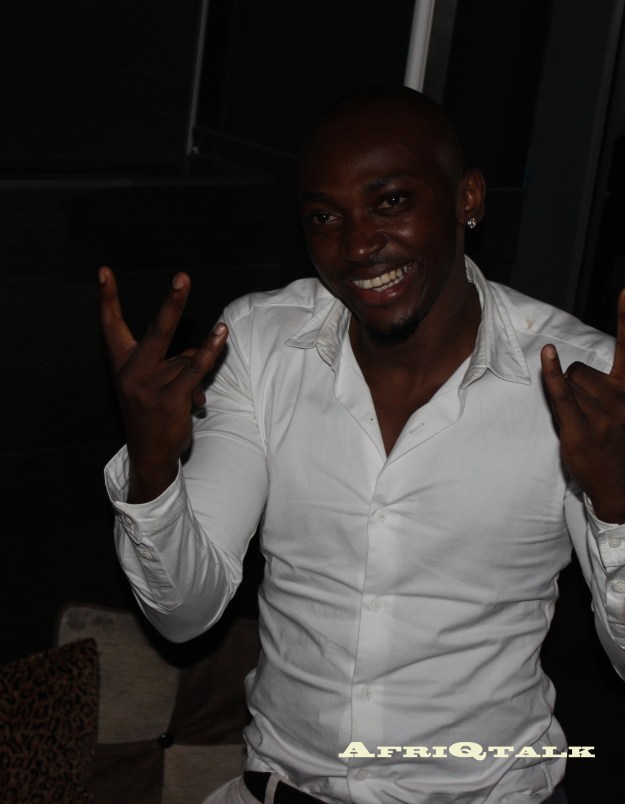
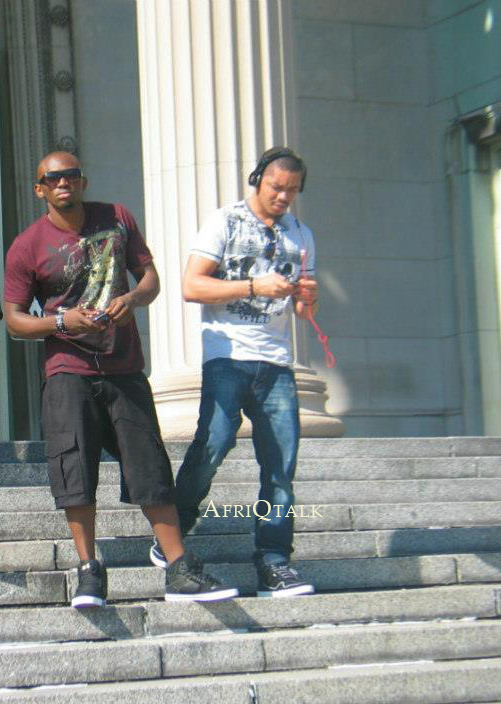
Award winning and top selling contemporary Nigerian-style African-pop duo “Vast of Bracket ” diagnosed with Lymphoma- cancer of the blood, after suffering from body pains, headaches, non stop coughing, loss of weight and weakness while in Paris for a show. Recently, he was recognized by the City and State of Philadelphia at the African American Museum, U.S.A. African-music-festival-featuring-bracket


Prior to his admission in London at the Wellington Hospital in February, he reportedly went to doctors in Nigeria, who were unable to diagnose his ailment, resulting to delays in treatment. Thankfully, he is responding well to  the 4 circles of chemotherapy treatment received. He will do a few more with each circle costing about N1.4million before returning to Nigeria next month. On behalf of AfriQtalk, we wish you a speedy recovery.


FOR IMMEDIATE RELEASE- ‘WEDLOCK OF THE GODS’ MAKES ITS DEBUT IN ATLANTA

Wedlock of the Gods

INTRIGUING WEST AFRICAN THEATRE PLAY ‘WEDLOCK OF THE GODS’ MAKES ITS DEBUT IN ATLANTA,GEORGIA DURING AFROXPLOSION 2013

 WRITTEN BY NIGERIA‘S FIRST FEMALE PLAYWRIGHT, DR ZULU SOFOLA;

DIRECTED BY ACCLAIMED BRITISH NOLLYWOOD ACTOR, WALE OJO

 Atlanta, Georgia (April, 2013) — As the ‘Fela on Broadway’ show makes its impact in recent times, US audiences continue to look forward to more of African Theater in the Diaspora.  In light of this, following a very successful London tour, the literal work of Nigeria’s first female Playwright, Dr Zulu Sofola, titled WEDLOCK OF THE GODS comes alive in theatre in Atlanta, Georgia at the SouthWest Arts Center located at 915, New Hope Road SW, Atlanta, Georgia 30331 on May 30 to June 2, 2013 during AfroXplosion 2013.

Brought to Atlanta by Zulu Sofola Productions and Chi Ife Productions and directed by acclaimed British Nollywood Actor, Wale Ojo; WEDLOCK OF THE GODS is a must see for all, for art lovers who seek something different and who yearn for a cultural connection to the continent.

Before Nollywood boomed, (Nollywood is the second largest film industry in the world, after Hollywood); there was classic West African theatre, which Nollywood derives its elements from; it is always full of drama, intensity and suspense. Atlanta art lovers and audiences will enjoy a firsthand stage experience of what true and original West African theatre is.

Ife Okwumabua of Chi Ife Productions says of the play – “Wedlock of the Gods is a production that is close to my heart because it was written by my Aunt, Dr. Zulu Sofola, and also it is a wonderful presentation of authentic African theater, something rarely seen on stage in the US. As a second generation Nigerian who grew up in America, it has been hard to find ways to reconnect to the continent. Wedlock of the Gods has been my journey back to my homeland through the arts. It is my hope that audiences will be moved by this West African love story and desire to see more culturally diverse bodies of work that is relatable and reconnects them to the performing arts” 

WEDLOCK OF THE GODS is a dramatic love story about how true love defies all earthly bonds. A story reminiscent of Shakespeare’s classic Romeo and Juliet tale, WEDLOCK OF THE GODS shows how the story of Romeo and Juliet would have happened if it took place in West Africa during more traditional times. Zulu Sofola’s personal story is very much like the play, in that she broke many barriers in her life as a female playwright and even in love. She passed away in 1998, six months after the loss of her beloved husband Adeyemi Sofola. Their love was inseparable. We invite you to explore the works of this celebrated artist. For Atlanta tickets, please visit – http://wotg.brownpapertickets.com/

ABOUT ZULU SOFOLA

Dr Zulu Sofola is one of Africa’s foremost female writers, renowned for giving a voice to the voiceless through poignant characters and the empowerment of women at grassroots levels. A modern pioneer in her own right, Zulu Sofola’s writing theme embodied the rich African traditions as portrayed through the culture of her people.  Her work also captured the perceived conflicts between the western culture and African value systems.

A prolific Writer and Director, she recorded seventeen plays, fifteen of which are published.  A distinguished Academician, Professor Zulu Sofola wrote numerous articles and presentations, and is still considered one of the great minds of African Literary Arts. Zulu Sofola’s plays challenge the political, spiritual, and traditional norms of Nigerian society.  For more information, visit www.zulusofola.com.  Email: zulusofolaproductions@gmail.com . Facebook – ZuluSofolaProductions, Twitter @ ZSPPro

 ABOUT WALE OJO

Wale’s acting career spans over two decades. Wale Ojo began acting with the first television station in Africa as a child prodigy and star. He turned professional in the United Kingdom at the age of 21. He is the pioneer and founder of the New Nigeria Cinema whose aim is to improve the quality of Nigerian films. To date, he runs a yearly festival titled New Nigeria Cinema day at the British Film Institute in London. A great lover of Shakespeare, he is at the moment researching an African movie adaptation of one of the Bard’s plays.

His recent television credits include The No 1 Ladies Detective Agency with Gill Scott and playing a Niger Delta militant in the new NBC series “The Philantropist” with James Purefoy. He also acted in the British film ‘Johnny English Reborn’.  His other recent screen accomplishments are as the main actor in the Nollywood film – ‘Phone Swap’ and the London TV Series ‘Meet The Adebanjos’,  in the works are the film- ‘The Guard’ with Don Cheadle, ‘Half of a Yellow Sun’ with Chiwetel Ejiofor and Thandie Newton, and a film production about Afro-Beat. Wale Ojo also directed ‘WEDLOCK OF THE GODS’ in London, UK in 2011.

ABOUT AFROXPLOSION 2013

AfroXplosion 2013 is a four day celebration of Afro-cultural Arts in the Diaspora; presented by Chi Ife Productions and DreamWeavers Entertainment in conjunction with the Fulton Arts County South West Arts Center in Atlanta, Georgia. AfroXplosion  2013 will present the music concert AFRODREAMFEST on May 31st at 6pm and the theatrical production – WEDLOCK OF THE GODS on May 30 and June 1  at 8pm respectively and 5pm on Sunday, June 2, 2013.

For Ticket information on WEDLOCK OF THE GODS, visit

www.zulusofola.com  – www.afrodreamfest.com

Location: Fulton COunty Southwest Arts Center, 915 New Hope Rd SW, Atlanta, GA 30331

Show times:                          

Thursday, May 30th at 8pm

Saturday, June 1st at 8pm

Sunday, June 2nd at 5pm

Tickets for all shows are only $35 students and $20 Students/Seniors.

Group discounts are available.

 For information or to purchase tickets visit www.zulusofola.com.

To purchase tickets by phone or for group rates and information, please call (678) 995- 3756 or zulusofolaproductions@gmail.com.

Tickets are also available in person at the door.

For Press inquiries and for more information, please contact Chi Ife Okwumabua, 678-662-8889.


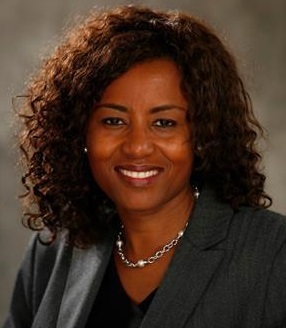
Mercy Obeime, M.D “SERVING THE UNDERSERVED”.

mercy1

In January 2004, Mercy Obeime delivered about $800,000 of donated medicine and supplies to her homeland, Nigeria. That was during her ”spare time“ as director of the Mercy Foundation, a non–profit healthcare organization she and several classmates from medical school started in 2001 to help fight HIV—AIDS in Nigeria, which she confides is “a big, silent problem, with lots more out there.”

During her normal “nine–to–five” life and well beyond, of course, like the deeply caring family physician she is, Obeime can be found at the Saint Francis Neighborhood Health Center at Garfield Park, where she has served as Medical Director since 1996. She was nominated a Local Legend by Representative Julia Carson [D–IN–7].

In prior recognition of her dedication and commitment to the inner–city residents of Indianapolis, Obeime was chosen as a National Winner of the 2003 Spirit of Women Awards in the Healthcare category. She is committed to treating the whole person, regardless of ability to pay. “It is very important to treat people with compassion and dignity,” she says “to listen and find out what it is they want. Along with all the technology of American medicine, there is a need for faith and values, especially with older people.”

The Health Center is a family practice providing primary and preventive care to families who cannot afford health insurance and who are charged only what they can pay without compromising their financial integrity. During the past five years, the number of patients served has ballooned three times to 2,500, with almost 70 percent being uninsured.

“The Health Center has been a successful mission for Saint Francis,” says Obeime. “Saint Francis has made health care services more accessible to the Garfield Park community, especially to those individuals and families who don’t have insurance coverage. Every day we’re challenged to do more with limited resources, yet every day we see progress toward a healthier community.”

In addition to managing clinical operations, Obeime aggressively pursues the grants that keep the Center’s doors open. She was instrumental in the Center’s designation as a Hoosier Healthwise enrollment site, part of a state–funded health care insurance program for low-income families, pregnant women and children. With assistance from the Wishard Aesculapian Society for African American Physicians  she also helped institute a health care tracking system for indigents in the Indianapolis area.

She connects resources with under–served populations, seeking funding and treatment for all. In collaboration with the Marion County Health Department, the Saint Francis Neighborhood Health Center at Garfield Park operates a B.A.B.E. [Beds and Britches, Etc.] Store, part of an incentive program to encourage mothers to engage in healthy behavior. By participating in a variety of activities—prenatal exams, practical parenting classes, smoking cessation courses, well–baby and well–child check–ups and immunizations—mothers earn B.A.B.E. vouchers that can be exchanged for diapers, baby, car seats and even baby furniture.

Whether at home in Indianapolis or back home in Nigeria, Obeime’s strong commitment to public health enhances the quality of life for women, their children and families, and their communities.

This article originally appeared on http://www.nlm.nih.gov

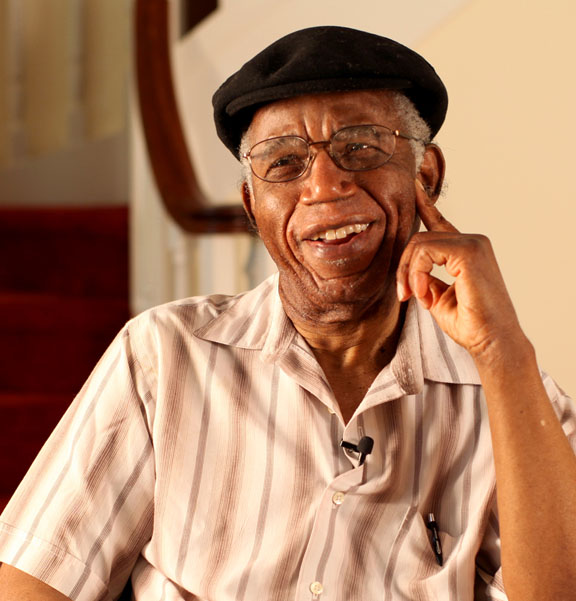
Chinua Achebe, The Father of Modern African Literature Dies at 82

Image
Professor Chinua Achebe was born in Ogidi, AnambraNigeria November 16, 1930. He was a novelist, poet, professor at Brown University and critic. He is best known for his first novel, Things Fall Apart (1958), which is the most widely read book in modern African literature. Raised by Christian parents in the Igbo town of Ogidi in southeastern Nigeria, Achebe excelled at school and won a scholarship for undergraduate studies.

He became faci
nated with world religions and traditional African cultures, and began writing stories as a university student. After graduation, he worked for the Nigerian Broadcasting Service and soon moved to the metropolis of Lagos. He gained worldwide attention for Things Fall Apart in the late 1950s; his later novels include No Longer at Ease (1960), Arrow of God (1964), A Man of the People (1966), and Anthills of the Savannah (1987).

 Professor Achebe writes his novels in English and has defended the use of English, a “language of colonizers”, in African literature. In 1975, his lecture An Image of Africa: Racism in Conrad’s “Heart of Darkness” became the focus of controversy, for its criticism of Joseph Conrad as “a bloody racist”. When the region of Biafra broke away from Nigeria in 1967, Achebe became a devoted supporter of Biafra independence and served as ambassador for the people of the new nation.

 The war ravaged the populace, and as starvation and violence took its toll, he appealed to the people of Europe and the Americas for aid. When the Nigerian government retook the region in 1970, he involved himself in political parties but soon resigned due to frustration over the corruption and elitism he witnessed. He lived in the United States for several years in the 1970s, and returned to the U.S. in 1990 after a car accident left him partially disabled.

 Professor Achebe’s novels focus on the traditions of Igbo society, the effect of Christian influences, and the clash of values during and after the colonial era. His style relies heavily on the Igbo oral tradition, and combines straightforward narration with representations of folk stories, proverbs, and oratory. He has also published a number of short stories, children’s books, and essay collections.

 Though Professor Achebe spent his later decades teaching at American universities, most recently at Brown, his writings — novels, stories, poems, essays and memoirs — were almost invariably rooted in the countryside and cities of his native Nigeria. His most memorable fictional characters were buffeted and bewildered by the competing pulls of traditional African culture and invasive Western values.

Achebe died at age 82 following a brief illness on Thursday, 22nd day of March, 2013 in Boston, MassachusettsUSA.


  • Apr 10, 2013: 

Senate of New York State, USA  has passed a resolution

J1186-2013: Mourning the death of paramount novelist Chinua Achebe, founder and pioneer of African literature

Sponsor: Parker J1186-2013 Actions


Same as: / Versions: J1186-2013Sponsor: PARKER Law Section: Resolutions, Legislative
 LEGISLATIVE  RESOLUTION  mourning the death of paramount novelist Chinua
 Achebe, founder and pioneer of African literature

 WHEREAS, It is the sense of this Legislative Body to pay tribute to  the
 lives  of those esteemed individuals of international renown who distin
 guished themselves through their life's work; and
 WHEREAS, Foremost novelist, Professor Chinua Achebe, died on Thursday,
 March 21, 2013, at the age of 82; and

 WHEREAS, Born Albert Chinualumogu Achebe, on November 16, 1930, Chinua
 Achebe was a Nigerian novelist, poet, professor, and critic; he was best
 known for his 1958 novel, THINGS FALL APART,  selling  over  12  million
 copies  around  the world, and having been translated into 50 languages,
 making him the most paraphrased African writer of all time; and

 WHEREAS, Raised by his parents in the Igbo town of Ogidi in southeast
 ern Nigeria, Chinua Achebe excelled academically and earned  a  scholar
 ship  for  undergraduate  studies; he became fascinated with world reli
 gions and traditional African cultures, and began writing stories  as  a
 college student; and

 WHEREAS,  After  graduation,  Chinua  Achebe  worked  for the Nigerian
 Broadcasting Service (NBS) and soon moved to the metropolis of Lagos; he
 gained worldwide attention for  THINGS  FALL  APART;  his  later  novels
 include:  NO  LONGER  AT  EASE (1960), ARROW OF GOD (1964), A MAN OF THE
 PEOPLE (1966), and ANTHILLS OF THE SAVANNAH (1987); and

 WHEREAS, When the region of Biafra broke away from  Nigeria  in  1967,
 Chinua  Achebe  became  a supporter of Biafran independence and acted as
 ambassador for the people of the new nation; the war ravaged  the  popu
 lace,  and  as starvation and violence took its toll, he appealed to the
 people of Europe and the Americas for assistance; and

 WHEREAS, When the Nigerian government retook the region in 1970, Chin
 ua Achebe involved himself in political parties, but soon  resigned  due
 to  frustration  over  the  corruption and elitism he witnessed, thereby
 deciding to devote himself to academia; he lived in  the  United  States
 for  several  years in the 1970s, and returned there in 1990 after a car
 accident left him partially disabled; and

 WHEREAS, Chinua Achebe's novels focus on the traditions of Igbo socie
 ty, the effect of Christian influences, and the  clash  of  Western  and
 traditional  African values during and after the colonial era; his style
 relies heavily on the Igbo oral tradition, and combines  straightforward
 narration  with  representations of folk stories, proverbs, and oratory;
 he also published a number of short stories, children's books, and essay
 collections; and

 WHEREAS, A David and Marianna Fisher University Professor and  Profes
 sor  of  Africana  Studies  at Brown University, Chinua Achebe worked up
 until the time of his death; and
 WHEREAS, New York's Bard College,  with  a  distinguished  history  of
 supporting Chinua Achebe's work and legacy, will continue to be a prima
 ry home for his projects; and

 WHEREAS,  Professor  Achebe's global significance lies not only in his
 talent and recognition as a writer, but also as a critical  thinker  and
 essayist who has written extensively on questions of the role of culture
 in Africa along with the social and political significance of aesthetics
 and analysis of the postcolonial state in Africa; and

 WHEREAS,  Chinua Achebe distinguished himself in his profession and by
 his sincere dedication and substantial contribution to  the  welfare  of
 his community; and

 WHEREAS,  Chinua  Achebe's commitment to excellence, and his spirit of
 humanity, carried over into all fields of enterprise, including charita
 ble and civic endeavors; and

 WHEREAS,  Chinua Achebe is survived by his wife, Christie, their chil
 dren, Chinelo, Ikechukwu, Chidi, and Nwando as well  as  his  grandchil
 dren, Chochi, Chino, Chidera, C.J. (Chinua Jr.), Nnamdi and Zeal; and
 WHEREAS,  Armed  with  a  humanistic spirit and imbued with a sense of
 compassion, Chinua Achebe leaves behind a legacy which will long  endure
 the  passage  of  time  and will remain as a comforting memory to all he
 served and befriended; now, therefore, be it
 RESOLVED, That this Legislative Body pause  in  its  deliberations  to
 mourn the death of paramount novelist Chinua Achebe, founder and pioneer
 of African literature; and be it further
 RESOLVED, That a copy of this Resolution, suitably engrossed, be tran
 smitted to the family of Chinua Achebe.
Female Genital Mutilation – What You May Not Know

female2

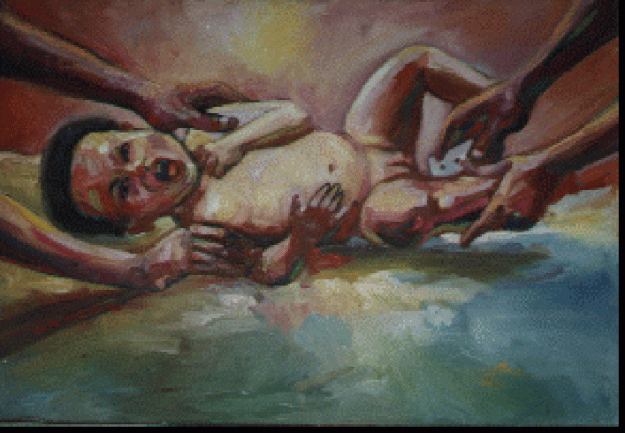
What if I Refuse?

female3

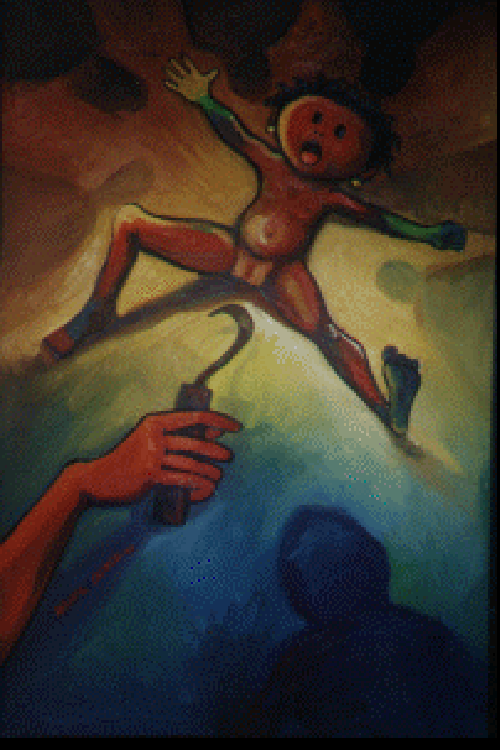
The Child Weeps

By Menassah Imonikebe, a well-known Nigerian painter from Edo State, he has many solo and group exhibitions to his credit

female genita

The Ugly Hand that Maims

female4

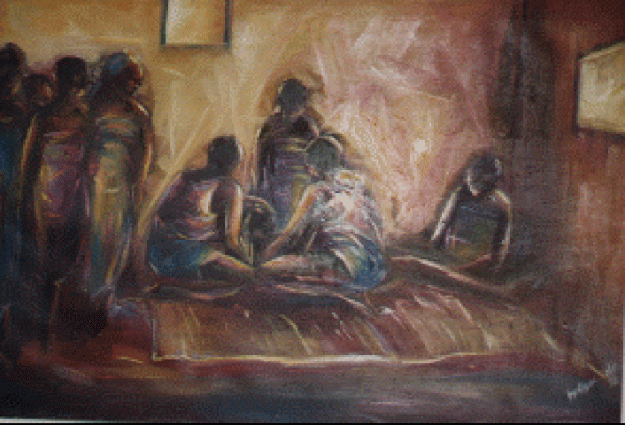
The Midnight Act

By Wande George, born in 1962, he earned the N.H.D. at Auchi Polytechnic in painting and illustration. Wande George presently works as a visualiser/illustrator at Lintas: Lagos, Nigeria‘s best known advertising agency. He has participated in several group exhibitions.

http://youtu.be/yZVN1q0sfOs

According to the World Health Organization, the most common type of female genital mutilation is excision of the clitoris and the labia minora, accounting for up to 80% of all cases: the most extreme form is infibulation, which constitutes about 15% of all procedures.

The WHO estimates that, around the world, between 100 and 132 million girls and women have been subjected to female genital mutilation. Each year, a further 2 million girls are estimated to be at risk. Most of them live in 28 African countries, a few in the Middle East and Asian countries, and increasingly in Europe, Canada, Australia, New Zealand and the United States of America.

A 1998 WHO Overview on Female Genital Mutilation provides details of their physical, psychological and sexual consequences for women and girls. Physical consequences include: death, haemorrhage, shock, injury to neighbouring organs, infection, severe pain, failure to heal, Abscess formation, dermoid, cyst, keloids, scar neuroma, painful sexual intercourse, HIV/AIDS, hepatitis B and other bloodborne diseases, pseudo-infibulation, reproductive tract infection, dysmenorrhea, urine retention, urinary tract infection, chronic urinary tract obstruction, urinary incontinence, stenosis of the artificial opening to the vagina, complications with regard to labour and delivery.

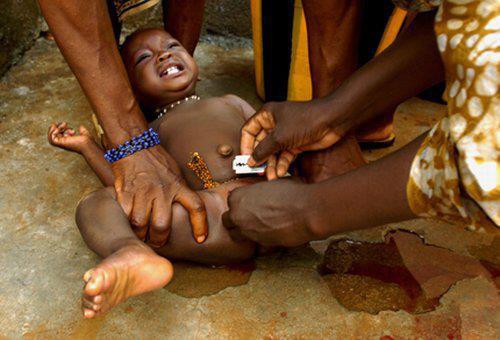
There was this girl, a friend of mine, named Vokke who I went to school with. She hails from Delta State Nigeria. I remember, she got circumcised at  the age of 12 by her parents. Vokke went through a gruesome ordeal, like the little girls in the video, you are about to watch. Vokke was cut with an unsterilized sharp object without anesthetics, after which she suffered numerous infections. She almost lost her life.

Female Genital Mutilation is a traditional practices that are deeply entrenched in many cultures and traditions worldwide. The practice is more prominent in Africa including Nigeria, where many belief that female genital mutilation makes the girl more fertile and aid easy delivery, while some does not regard a female as a woman until she undergoes female genital mutilation. The general belief is that genital mutilation reduce level of promiscuity in women.

How can the process of putting an end to female genital mutilation be accelerated, especially when victims do not speak out against it because of family or religious traditions? One way is by encouraging men to take action alongside women to challenge religious, cultural and traditional arguments used to justify this practice.

On March 4, a new game on Facebook, inspired by the book “Half the Sky: Turning Oppression into Opportunity for Women Worldwide,” will be introduced, with a focus on raising awareness of issues like female genital mutilation and child prostitution.

Half the Sky Movement: The Game, more than three years in the making, is one of the most ambitious efforts yet to entice a mass audience to social media games with the goal of social change. It is a concept, however, that even its supporters say is largely untested.

The game seeks to engage new audiences not reached by the 2009 book, written by the married team of Nicholas D. Kristof, a columnist for The New York Times, and Sheryl WuDunn, a former Times journalist.