WORLD AUDIENCE PROMOTIONS- PRESENTS SEUN KUTI, LIVE IN ATL WED. APR. 4, 8PM By popular demand, Atlanta welcomes Seun Kuti and the Egypt 80 to Atlanta – April 4th, 8pm Concert. 1099 euclid ave, little 5 points. Don’t miss it. It is going to be HOT!!! Like Father like Son.
A NEW & TRAILBLAZING WOMEN EMPOWERMENT ORGANIZATION EMERGES AS MAJOR FORCE IN THE MARKET PLACE!
A NEW & TRAILBLAZING WOMEN EMPOWERMENT ORGANIZATION EMERGES AS MAJOR FORCE IN THE MARKET PLACE!
Advancing & Challenging Women To DARE To
Achieve Their “impossible” in Uncertain Times!
IF YOU CAN ENVISION IT, BELIEVE IT, YOU CAN ACHIEVE IT!
GREENBELT, MARYLAND, FEBRUARY 16, 2012- Women Empowered To Achieve The impossible (WETATi).
INAUGURAL PRESENTATION & CELEBRATION
MARTIN’S CROSSWINDS; SATURDAY MARCH 24, 2012; 10am-4pm!
WETATi was founded to Advance and Challenge women to DARE to achieve their “impossible” – whatever it is that they once thought and/or were told was “impossible” in life.
WETATi is a very unique and empowered women community membership based organization, whose mission it is to help two million women globally achieve their ‘impossible’ within two years, regardless of their geographical or socio-economic background or status. As our Founder would say, “if you know how, and have the right support system and community to effectuate it, the “impossible” can be achieved.” WETATI’s proven program is predicated mainly upon five major areas: (1) Wellness (2) Career (3) Relationship (4) Spirituality and (5) Life Balance.
The organization provides an accessible, affordable, innovative and supportive community of services and resources for those women who DARE to dream and achieve their “impossible.”
The inaugural presentation and celebration will take place in Greenbelt, MD at Martin’s Crosswinds, Saturday, March 24, 2012 from 10am- 4pm. The event program will consist of a distinguished and iconic KEYNOTE SPEAKER in the MUSIC INDUSTRY, honorable guest speakers, empowering and life changing workshops, live entertainment, awards, full course gourmet luncheon, selected vendors, fashion show featuring the WETATi Clothing line, and the newly released WETATi theme song (dubbed WETATiPower) and much more!
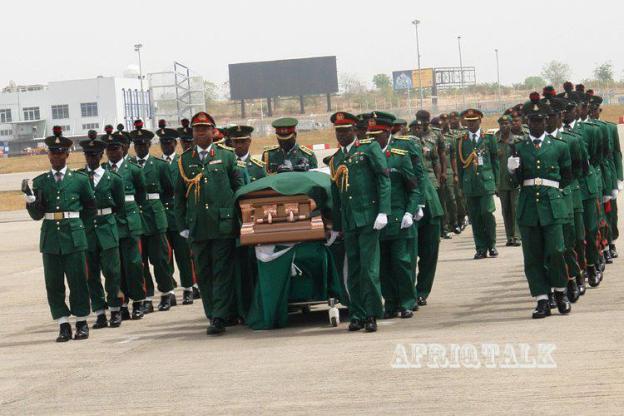
Is there anyone left in our land like Ojukwu? Is there anyone in the STATE OF THE RISING SUN who can uphold the values of our Clan like IKEMBA? In the giant of Africa, who amongst our present leaders will attest to the test of times like EZEIGBO GBURUGBURU, holding on tenaciously to morality and uprightness to the very end; refusing to compromise for immediate crumbs from corruption and power drunkenness? The irked vacuums the Troy and our IKEMBA sleeps! Is there anyone left?
In the Biafra uprising he never came to bow, he came to conquer! Jolted and willing, recruiting combatant ready and available army of the people, hoisting the flag with the RISING SUN reinvigorated all and sundry, the anthem inspiring and re-engineering hurting hearts, consoled by an ebullient orator. The perception by any that your love for Nigeria is monetarily induced may provoke a reawakening to revolt against the land again and again. Is there anyone left? Questions in quests of honest answers as DIM will give. Is there anyone left?
He refused to be the dumpy in the history books of past glory. What does it matter anyway, there is nothing to lose or gain; the land is desiccated, lacking men with character and purpose like IKEMBA. Have we lost it all to a glorious misadventure to nationhood? Is our blood and sweat garnishing the GIANT OF AFRICA without any meritorious appreciations? Will our commitment and loyalties be ridiculed with borrowed robes of ignominy? Is there anyone left?
My mother was only six years old when IKEMBA made public his escapes as we lost patriots and loved ones to the cold hands of death caused by neighbors of yesteryear. There was a river flowing eastwards, a river of the blood of Ndi-Igbo, flowing towards the sustenance of Nigeria. And a cry from that river emanated in our hearts the picture of a wailing child whose glorious dreams are punctured in the womb of a pregnant mother; both slaughtered in the land they are told is their fathers. That cry so loud it came, evacuating sleep and peace! Is there anyone left?
Where did we go wrong? CHUKWUEMEKA arose to the demands of that cry, brandishing his gallantry and skills, the peoples General chanted for the STATE OF THE RISING SUN where Igbo’s rightly belong. EZEIGBO GBURUGBURU called for the STATE OF BIAFRA immediately and we went to war! Is there anyone left?
At least down there in Biafra we would not have been hounded by our acclaimed Neighbors; life would not be snuffed out of defenseless people; women and children by senseless blood thirsty demons in the name of tribalism. Is there anyone left?
Arise and shine you proud citizens of the State of the Rising Sun! Our love for Nigeria was rewarded with hatred by our Neighbors. We have moved to every part of this country Nigeria and developed everywhere without fear or Favor, yet, none of our supposed brothers and sisters or their children can proudly say they have any meaningful investment across the Niger Bridge. Some of our sons and daughters may have desecrated the land, but home is always sweet-home. Is there anyone left?
As IKEMBA sleeps, the elders of our clan must be reminded that these seven important needs of mankind shall keeps us awake; RELIGION, EDUCATION, MONEY, HEALTHCARE, FOOD, INFORMATION AND PROTECTION. Adieu! Adieu!! ODIMEGWU adieu!!!
Do you know someone that might be in an abusive relationship? If so, tell them to walk away, and seek help because love don’t hurt. There are two types of domestic abuse, mental and physical abuse, which can result to low self esteem or control. Domestic violence can be defined as a pattern of abusive behavior in any relationship that is used by one partner to gain or maintain power and control over an intimate partner. According to the National Center for Injury Prevention and Control, women experience about 4.8 million intimate partner-related physical assaults and rapes every year. Less than 20 percent of battered women sought medical treatment following an injury.
Are men and women equal? Take a listen to this video
Taking on violence against women in Africa By Mary Kimani
The incident was not unusual in Africa. In December 1998 a Kenyan police officer, Felix Nthiwa Munayo, got home late and demanded meat for his dinner. There was none in the house. Enraged, he beat his wife, Betty Kavata. Paralyzed and brain-damaged, Ms. Kavata died five months later, on her 28th birthday.
But unlike many such cases, Ms. Kavata’s death did not pass in silence. The Kenyan media covered the story extensively. Images of the fatally injured woman and news of her death generated nationwide debate on domestic violence. There followed five years of protests, demonstrations and lobbying by non-governmental organizations (NGOs), as well as by outraged men and parliamentarians. Finally, the government passed a family protection bill criminalizing wife-beating and other forms of domestic violence.
According to the World Health Organization (WHO), violence affects millions of women in Africa. In a 2005 study on women’s health and domestic violence, the WHO found that 50 per cent of women in Tanzania and 71 per cent of women in Ethiopia’s rural areas reported beatings or other forms of violence by husbands or other intimate partners.
In South Africa, reports Amnesty International, about one woman is killed by her husband or boyfriend every six hours. In Zimbabwe, six out of 10 murder cases tried in the Harare High Court in 1998 were related to domestic violence. In Kenya, the attorney general’s office reported in 2003 that domestic violence accounted for 47 per cent of all homicides.
‘No boundaries’
Domestic violence is a global problem. In Europe, estimates the WHO, violence in the home is the primary cause of injury and death for women aged 16–44, more lethal than road accidents or cancer. Indeed, “violence against women,” said then-UN Secretary-General Kofi Annan in 1999, “knows no boundaries of geography, culture or wealth. It is perhaps the most shameful human rights violation.” And, he added, it is “perhaps the most pervasive.”
Violence against women goes beyond beatings. It includes forced marriage, dowry-related violence, marital rape, sexual harassment, intimidation at work and in educational institutions, forced pregnancy, forced abortion, forced sterilization, trafficking and forced prostitution.
Such practices cause trauma, injuries and death. Female genital cutting, for example, is a common cultural practice in parts of Africa. Yet it can cause “bleeding and infection, urinary incontinence, difficulties with childbirth and even death,” reports the WHO. The organization estimates that 130 million girls have undergone the procedure globally and 2 million are at risk each year, despite international agreements banning the practice.
Sexual violence is another problem. A local organization in Zaria, Nigeria, found that 16 per cent of patients with sexually transmitted diseases (STDs) were girls under the age of five, a sign of sexual assault. In the single year 1990, the Genito-Urinary Centre in Harare, Zimbabwe, treated more than 900 girls under 12 for STDs. Such assaults, observes a WHO publication, put “African women and girls at higher risk of sexually transmitted diseases [including HIV/AIDS] than men and boys.”
Rooted in culture
Abusers of women tend to view violence as the only way to solve family conflicts, according to a 1999 study on violence against women by the Johns Hopkins Bloomberg School of Public Health near Baltimore, US. Perpetrators typically have a history of violent behavior, grew up in violent homes and often abuse alcohol and drugs.
However, violence against women, the Johns Hopkins study points out, goes beyond the brutalization of women by individuals. The prevalence of the phenomenon, “cuts across social and economic situations, and is deeply embedded in cultures around the world — so much so that millions of women consider it a way of life.”
In a report by the UN Population Fund (UNFPA) in 2000, the agency noted that in interviews in Africa and Asia, “the right of a husband to beat or physically intimidate his wife” came out as “a deeply held conviction.” Even societies where women appear to enjoy better status “condone or at least tolerate a certain amount of violence against women.”
Such cultural norms put women in subservient positions in relation to their husbands and other males. That inferior status makes women “undervalued, disrespected and prone to violence by their male counterparts,” observed a 2003 report by the UN Development Fund for Women (UNIFEM). Ms. Radhika Coomaraswamy, the former UN special rapporteur on violence against women, agreed, noting that discriminatory norms, combined with economic and social inequalities, “serve to keep women subservient and perpetuate violence by men against them.”
Focusing specifically on Africa, Ms. Heidi Hudson found in a 2006 study by the South African Institute of Security Studies that “the subservient status of women, particularly rural women, in many African countries is deeply rooted in tradition.”
This is true to such an extent, Ms. Hudson added, that women can be perceived as objects or property, a view reflected especially clearly in practices such as wife inheritance and dowry payments.
Here are some ways to help a friend who is being abused:
Set up a time to talk. Try to make sure you have privacy and won’t be distracted or interrupted.
Let your friend know you’re concerned about her safety. Be honest. Tell her about times when you were worried about her.
Help her see that what she’s going through is not right. Let her know you want to help.
Be supportive. Listen to your friend. Keep in mind that it may be very hard for her to talk about the abuse. Tell her that she is not alone, and that people want to help.
Offer specific help. You might say you are willing to just listen, to help her with childcare, or to provide transportation, for example.
Don’t place shame, blame, or guilt on your friend. Don’t say, “You just need to leave.” Instead, say something like, “I get scared thinking about what might happen to you.” Tell her you understand that her situation is very difficult.
Help her make a safety plan. Safety planning includes picking a place to go and packing important items.
Encourage your friend to talk to someone who can help. Offer to help her find a local domestic violence agency.
Offer to go with her to the agency, the police, or court.
If your friend decides to stay, continue to be supportive. Your friend may decide to stay in the relationship, or she may leave and then go back many times. It may be hard for you to understand, but people stay in abusive relationships for many reasons. Be supportive, no matter what your friend decides to do.
Encourage your friend to do things outside of the relationship. It’s important for her to see friends and family.
If your friend decides to leave, continue to offer support. Even though the relationship was abusive, she may feel sad and lonely once it is over. She also may need help getting services from agencies or community groups.
Keep in mind that you can’t “rescue” your friend. She has to be the one to decide it’s time to get help. Support her no matter what her decision.
Let your friend know that you will always be there no matter what.
16 Celebrities Who Support The Cause to End Violence Against Women.









 AfriQtalk Diaspora
You must be logged in to post a comment.