Tag Archives: United States

Leroy Bamidele Fagbemi – An Advocate For People With Disability

Leroy Bamidele Fagbemi, “aka” Mr. Flint” is an American based Nigerian entertainer, born to the Fagbemi family of Lagos. He is also, an advocate for people with disability for a good reason.  Leroy Bamidele Fagbemi, sustained a spinal cord injury from a road accident, late 90’s in the United States (USA), which confined him to the wheel chair, not giving up his dreams, he returned to his first love, music.

As a successful hip hop artist, Mr. Flint is back with good news for the physically challenged, his foundation “Second Chance in Life”  is an organization that is all about helping  people with disabilities to discover their passion and help them achieve their dreams in whatever career they want to pursue. Fagbemi’s  new video “You think my life is easy”  shows a young man, who deals with everyday challenges but not deterred.

In my conversation with Mr. flint, he expressed his frustration with celebrities, artist and governments in Africa for not doing enough to bring awareness about disability, especially in Nigeria, where people with disability are often discriminated against or seen as liabilities. ” Handicaps are humans beings, they do what normal people do, but the difference is that they can’t walk”.

As for any his future projects, Mr. Flint’s goal is to see that the Nigerian Government gets involve in disability awareness campaigns and foundations, provide adequate rehabilitation facilities and infrastructures to ensure that people with any form of disability live a normal life, learn life coping skills and are accepted by society.

He emphasized, how such programs has helped him to become independent. However, Leroy Bamidele Fagbemi, believes that appealing to corporate organizations and Nigerians in the diaspora is key to supporting his pet projects in Nigeria. For more information, contact Mr Flint at http://facebook.com/lfagbemiskinnyjoe

Facts About Disability in Africa

According to The World Bank, 20% of people with disabilities make up the poorest of the poor, which translates to approximately 260 million people with disabilities living in absolute poverty.  The unprecedented level of poverty among this group and the associated hunger leads to Malnutrition, which in turn can result in a number of disabilities, such as stunting, blindness, and diabetes. Also, hunger is a driving force, which push disabled persons into street begging. Generally speaking, disabled people are seen as ‘good for nothing’ and they suffer severe psychological problems in Africa.

The World Health Organization (WHO) estimated that about 500 million people live with disability worldwide, with about 75% living in the developing countries (Mickailakis, 1997; Lang and Upah, 2008). In Nigeria, WHO estimates put the number of people with disability at 19 million or approximately 20% of the country’s population (Lang and Upah, 2008).

There are no credible and robust statistics in Nigeria about most things, including disability. There is therefore a big knowledge gap that needs to be bridged.The Nigerian government supported the UN standard rules on the equalization of opportunities for people with disability. There was also a decree promulgated in 1993 to enhance the social and societal position of people with disability.

Nigerians living with disability are no better off when compared with others living in other parts of the developing world, in terms of the challenges they face — they are poor, marginalized and excluded (The Guardian, April 12, 2009; Lang and Upah, 2008).

Despite the declaration of full participation in the disability agenda of the United Nations by the Nigerian government, Nigerians with disabilities are still faced with these challenges (The Guardian, April 12, 2009; Michailakis, 1997). A recent review of disability issues in Nigeria identified many factors why the disability agenda continues to suffer.

Notable among them were: the absence of disability discrimination laws, lack of social protection, poor understanding of disability issues by the public, and poor access to rehabilitation services. The report recommended, among others, the collection of robust and reliable data, and advocacy for the passage of the disability bill into law (Lang and Upal, 2008).
Food For Thought

By Switz Chef (Olufemi Sweet)

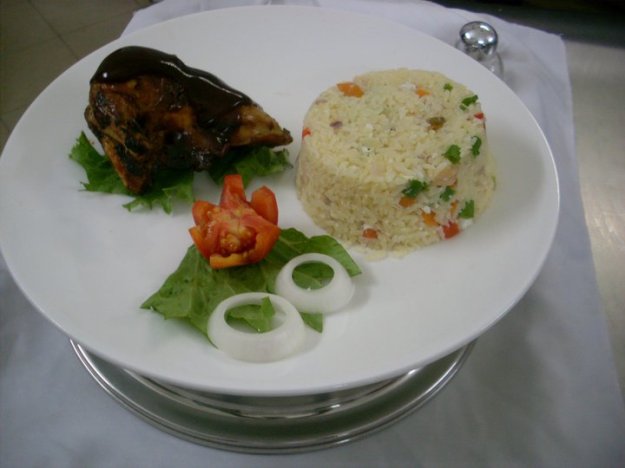
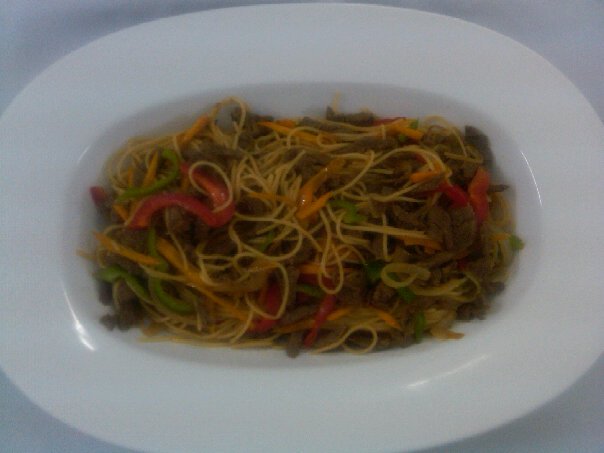
Click to find out  AfriQtalk’s Pick of the day @ Palmview Manor Hotel, Victoria Island, Lagos. Nigeria


To have a free recipe for my pick of the day, email me at afriqtalk@yahoo.com.

Diversity Visa Lottery For 2013 is Here Again!

If you’re planning on migrating to the U.S, here is an opportunity to visit:  www.dvlottery.state.gov.  Every year, the U.S. Government makes available 50,000 permanent resident visas to citizens of countries that have a low rate of immigration to the United States, known as the Green Card Lottery. The Diversity Visa Lottery is mandated by the U.S. Congress and administered by the Department of State.  The purpose of the Visa Lottery is to diversify our immigrant population in the U.S. Therefore, the Visa Lottery is open to countries whose natives number is less than 50,000 immigrants during the previous five years.

Also the number of eligible countries change from year to year. According to Deputy Assistant Secretary for services David Donahue, there are a few changes to the program this year, South Sudan and Poland will participate in the 2013 program,  while Bangladesh no longer qualifies and will therefore not participate this year because of high rates of immigration to the U.S.

The online registration period for the 2013 Diversity Visa Program (DV-2013) began on Tuesday, October 4, at noon, eastern daylight time and will conclude on Saturday, November 5, at noon, according to the department’s website. There is no charge to complete the Electronic Diversity Visa Entry Form, as usual fraudulent websites are posing as official U.S. government sites.

Some companies, even Law firms are posing as the U.S. government and asking for money  to complete DV entry forms. Any e-mail requesting an applicant pay a fee up front is fraudulent. The entire process will be done electronically, from registration to the interview scheduling process.  It is very important that you keep and save your confirmation, or registration number.  If you are selected, the website will also be where you  should go to find information on the date, location, and time of your visa interview.

You will need to complete the immigrant visa application, submit required documents and forms, pay required fees, complete a medical examination, and be interviewed by a consular officer at the U.S. embassy or consulate to demonstrate you qualify for a diversity visa. While those who file for adjustment of status in the United States will receive separate instructions on how to mail DV fees to a U.S. bank.  Any omissions on the application, particularly names of dependents, may result in disqualification of the applicant.

The Kentucky Consular Center will provide application information either by mail (for DV-2011 selectees) or online through the Entrant Status Check on the E-DV website www.dvlottery.state.gov (for DV-2012 selectees). After you receive instructions, you will need to demonstrate you are eligible to receive a visa by qualifying based on education, work, and other requirements. The law and regulations require that every DV entrant must have at least:

A high school education or its equivalent; or

Two years of work experience within the past five years in an occupation requiring at least two years’ training or experience.

It is important to understand that as soon as you confirm that you have been successful in the process, you should pursue the immigrant visa immediately because it must be completed by the deadline of September 30, 2013. If the deadline is missed, so will the opportunity to immigrate. Also be aware that typically more than 55,000 winners are selected, but only 50,000 visas may be issued, so there is a rush to complete the process. It is a first come, first served basis.

Good luck to all DV applicants.

U.S.- Nigeria Bilateral Relations! What does it mean?

On April 6, 2010, U.S. Secretary of State Hillary Clinton and Nigerian Secretary to the Government of the Federation Yayale Ahmed signed the U.S.-Nigeria Bi-national Commission in Washington, D.C.  That Agreement created four thematic working groups intended to meet periodically to enhance bilateral cooperation on four key areas:

(1) Good Governance, Transparency, and Integrity

(2) Energy and Investment

(3) Niger Delta and Regional Security, and

(4) Agriculture and Food Security

According to U.S. department of State, an estimated one million Nigerians and Nigerian Americans live, study, and work in the United States, still the democratic and economic progress in Nigeria is challenged by poor governance, entrenched corruption, internal conflict, ineffective service delivery, and pervasive poverty. While there has been notable progress in macroeconomic policy reform over the past few years, these reforms have yet to bring measurable improvements to the lives of the people.

U.S. – Nigeria Bilateral Relations! What does it mean? The  U.S department of State selected ten newly elected Federal House of Representatives to take part in a three-week International Visitor leader Exchange Program entitled “Democracy and Good Governance” from September 6-23, 2011. The member of the Nigerian National Assembly explored the U.S. political process, learned about Good governance,Transparency, integrity and accountability in government and business.

To promote bilateral relations, the U.S is addressing these challenges by engaging civil society and government partners to battle corruption; increase professionalism of the military and law enforcement agencies; strengthen health and education systems to deliver quality services; growing the non-oil economy; and improving the environment for regional and international trade.

Young At Heart Poetry Vol 1: Beauty Beyond Memory

When memories cry

When memories fade and die

I’m going to grow old

My passion, my fiery passion

My flaming lust is going to grow cold

But my heart will always flow with molten, love lava

In your name this lava flows through my veins

My heart beats for you

My heart will never cease to beat your name

When I lose my charm and my glamour

When I lose my physique and my game

When I’m old and wrinkly

When I cannot look myself in the mirror

I’ll still stare at you

When memories fade, when I forget the days of the week

And the months of the year

When I mix names, and faces

The memory of you will always shine bright and clear

For your image has been engraved to my memory

I will never forget your radiance and beauty

I will die happy with the image of your sweet smile on my mind

And love on my lips and in my heart your sweet kiss remains.

~ Princess Asha Okojie
© 2011  AfriQtalk Entertainment. All rights reserved.